Booking choice: The Kawarau Bridge Bungy, from $182 per person. Check dates Tour details
Most people arrive, look at the red iron towers, think “old bridge” and head for the check-in desk. Fair enough. But stand on it for a minute. Those inward-leaning cables were a clever answer to a wind problem in 1880, and the whole thing has outlived the road it was built for by more than sixty years.
We've pulled this from Heritage New Zealand's listing, the Department of Conservation, Wikipedia and AJ Hackett's own timeline. Where they disagree on a number, we say so.
The quick answer
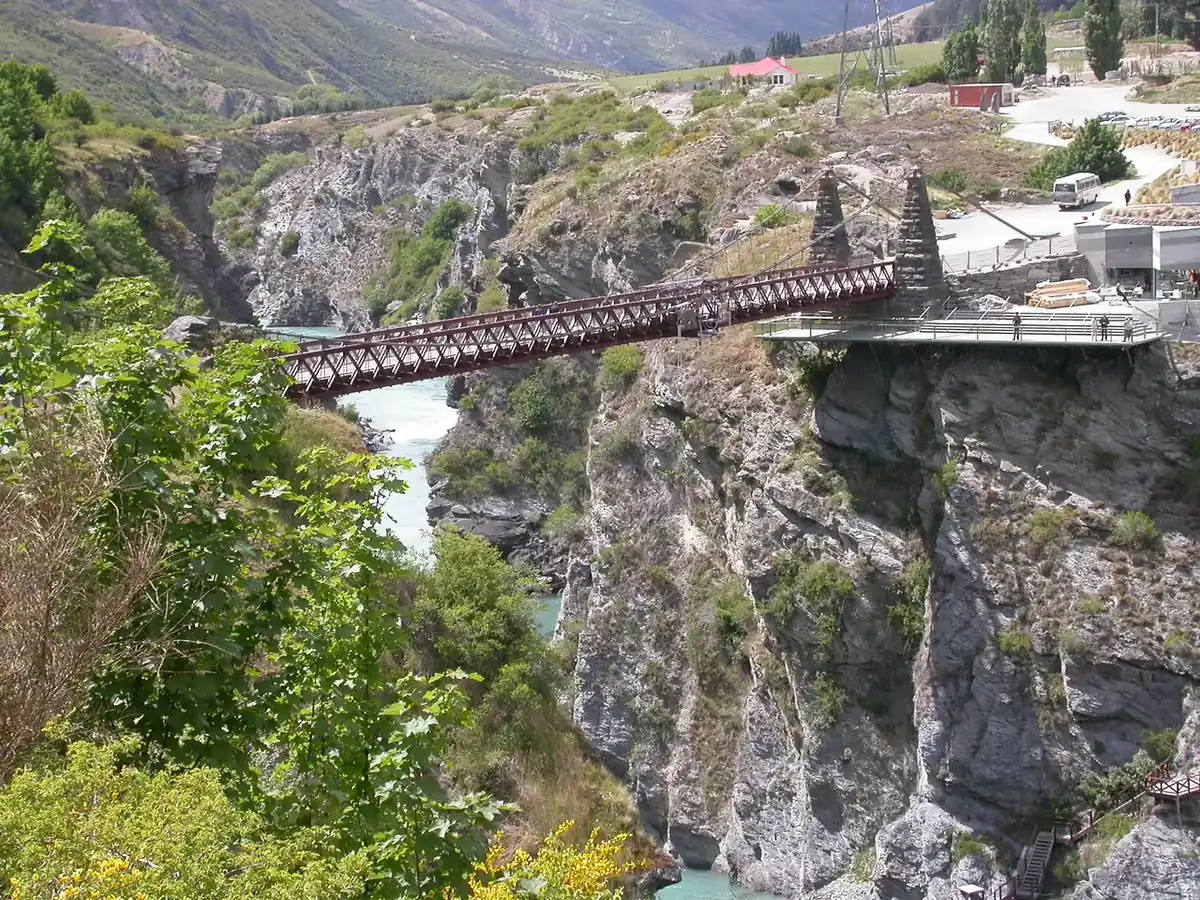
The Kawarau Gorge Suspension Bridge was designed by engineer Harry Higginson and opened in December 1880 to carry traffic to the Central Otago goldfields. It sits 43 m above the Kawarau River. Road traffic moved to a new State Highway 6 bridge upstream in 1963, and in 1981 the old bridge became a Category I historic place (Heritage NZ List No. 50). AJ Hackett, fresh from jumping off the Eiffel Tower in 1987, opened the world's first commercial bungy here with Henry van Asch on 12 November 1988. Today the bridge carries the Kawarau Bridge Bungy and walkers and riders on the Queenstown Trail.
Why was the Kawarau Bridge built?
Gold. After strikes in Otago from 1861 and on the Arrow River in 1862, thousands of miners poured into the district, and the Kawarau Gorge was a nightmare to cross. Punts and low bridges kept getting washed away. A high bridge fixed that.
Picture the Wakatipu in the early 1860s. Sheep runs, a handful of settlers, and then gold. Queenstown NZ tells it with the shearer Jack Tewa finding gold in the Arrow River in 1862, and fifteen hundred miners camped along the river within weeks. Everyone needed to get in. And out, with supplies and gold.
The Kawarau was the obstacle. According to Heritage New Zealand, early punts and low-lying bridges were often destroyed by floods, “cutting communities off from the outside world”. The Morven Ferry punt, 3.7 km upstream, carried people across through the 1860s and into the 1870s. By the late 1870s the Government had been talked into putting up £8,000 for a proper bridge.
A bridge high enough that no flood could touch it. That was the whole idea.
Who designed the Kawarau Bridge, and when was it finished?
Harry Higginson, a Dunedin engineer, designed it. The site was settled in 1879, contractor John McCormick built it in about 15 months, and it opened in December 1880.
Heritage NZ has the detail. The tender went to John McCormick in September 1879 and the bridge went up within 15 months. The whole contract came to £13,000, but that included two other bridges and several miles of road. The main span was 300 feet, about 91 m, which one account of the day reckoned was “the longest span, we believe, in the colonies”.
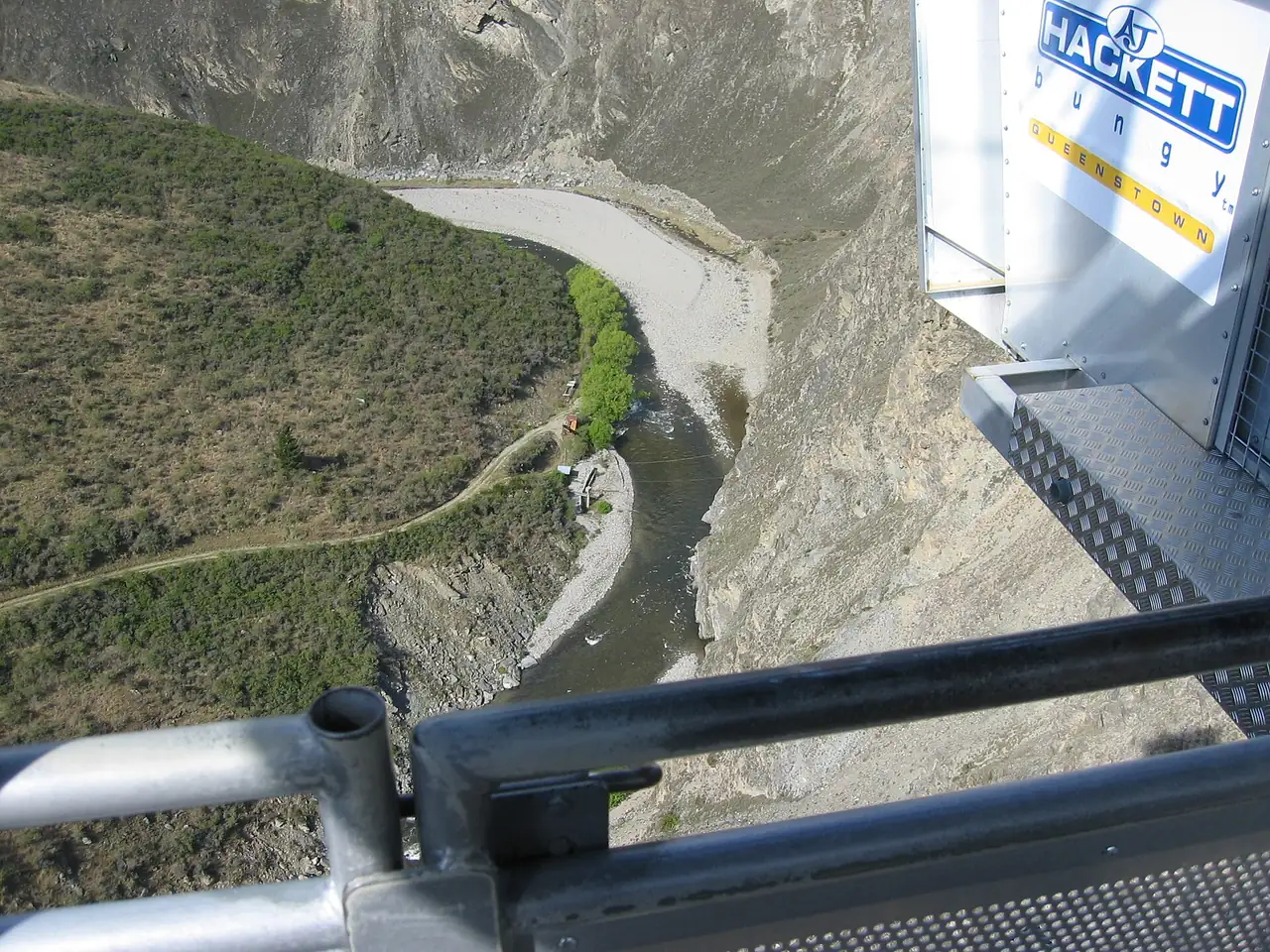
Numbers drift between sources here. Heritage NZ gives that 91 m span at about 45.7 m above the river. The Department of Conservation says 42 m high with a 120 m span, which sounds like the full length. The bungy height everyone quotes is 43 m. We go with 43 m, because that's the drop you actually take.
The clever bit was the wind. The Kawarau Gorge funnels it hard, so Higginson angled the cables inward to stiffen the deck against sideways gusts. In 1882 he won a Telford Premium for the engineering, a British prize from the Institution of Civil Engineers. Not bad for a bridge at the end of the world.
What happened to the bridge in 1963?
It was retired from road traffic. A new State Highway 6 bridge opened about 230 m upstream, the road over the old bridge closed, and the 1880 bridge was kept for its history rather than pulled down.
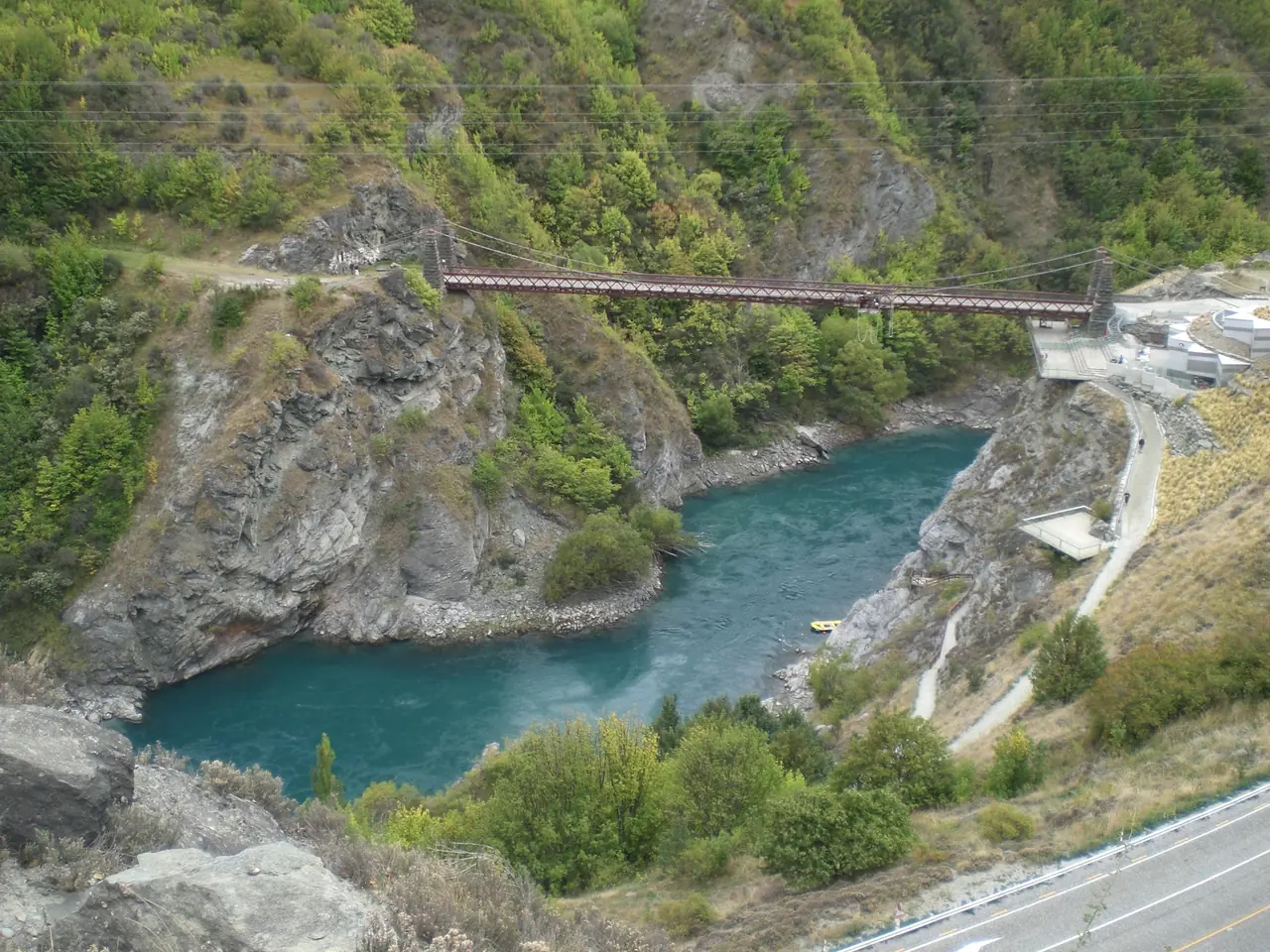
Eighty-odd years of wagons, then cars, then trucks, on an 1880 deck. It couldn't last. In 1963 the traffic moved to the new highway bridge, which you can see from the old one: the concrete arch carrying SH6 just up the gorge. If you're rafting the Kawarau you go under it.
Nobody knocked the old bridge down, which in 1963 New Zealand was not a given. It sat there. In November 1981 it was registered as a Category I historic place, List No. 50 with what is now Heritage New Zealand, the top tier. It stands on Department of Conservation land and DOC looks after it.
Then, in the late 1980s, more than $100,000 went into structural upgrades, per Heritage NZ. Which brings us to the bungy.
How did the Kawarau Bridge become the world's first bungy site?
AJ Hackett jumped off the Eiffel Tower on 26 June 1987, got arrested, and got famous. On 12 November 1988 he and Henry van Asch opened the first year-round commercial public bungy site, on the Kawarau Bridge.
The idea wasn't theirs from scratch. Oxford's Dangerous Sports Club had been throwing themselves off bridges on elastic in the late 1970s, inspired by the land divers of Vanuatu. What Hackett and van Asch did was make it safe enough, and repeatable enough, to sell. Back home they'd already been testing cords and jumping off bridges before the Paris stunt.
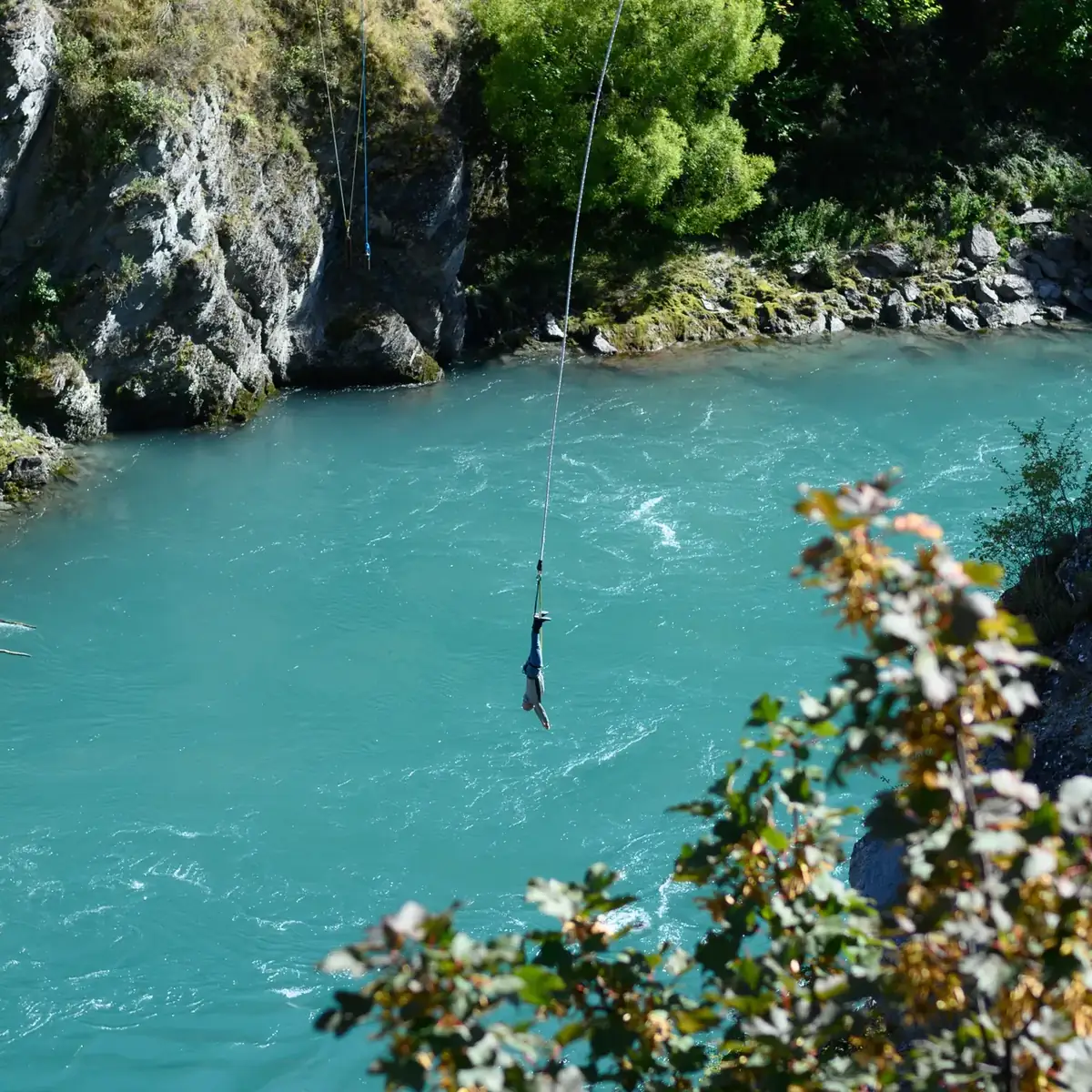
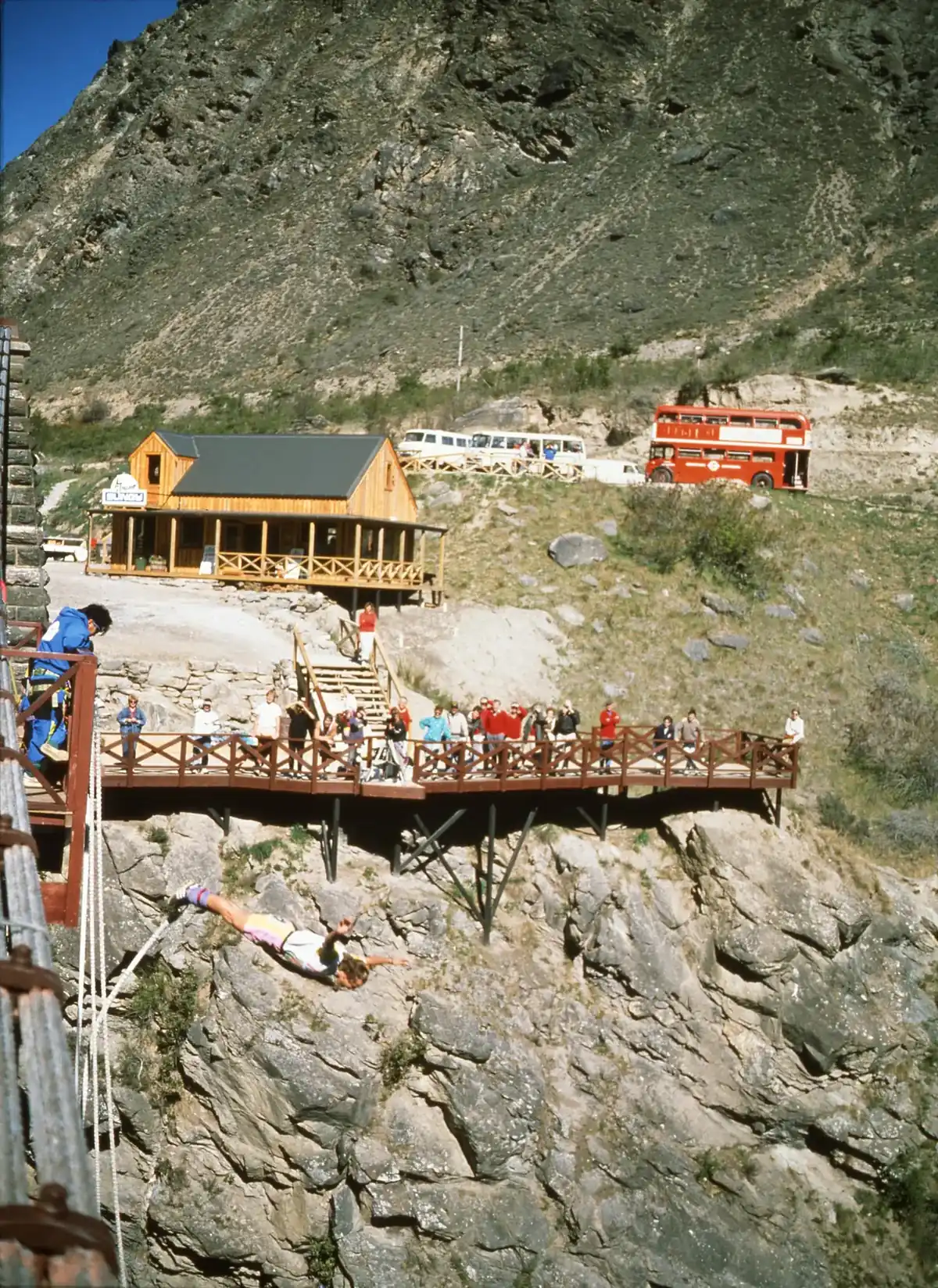
The Eiffel Tower jump was pure publicity. Hackett went off it in June 1987, was arrested by Paris police, and the footage went round the world. Seventeen months later they opened at the Kawarau with a site the AJ Hackett timeline calls “the world's first year-round commercial public bungy site”. The hero photo up top is from that first year.
The bridge was perfect. High, solid, over deep water, 25 minutes from a town already full of backpackers looking for trouble. The centre now built into the cliff calls itself the “World Home of Bungy”, and AJ Hackett's blog puts visitor numbers at the site at over 400,000 a year. Whether you jump or not, that's a lot of people standing where the miners' coaches used to cross.
“It's nice that it's the very first in the world.” Jasper, Netherlands, August 2026 (translated)
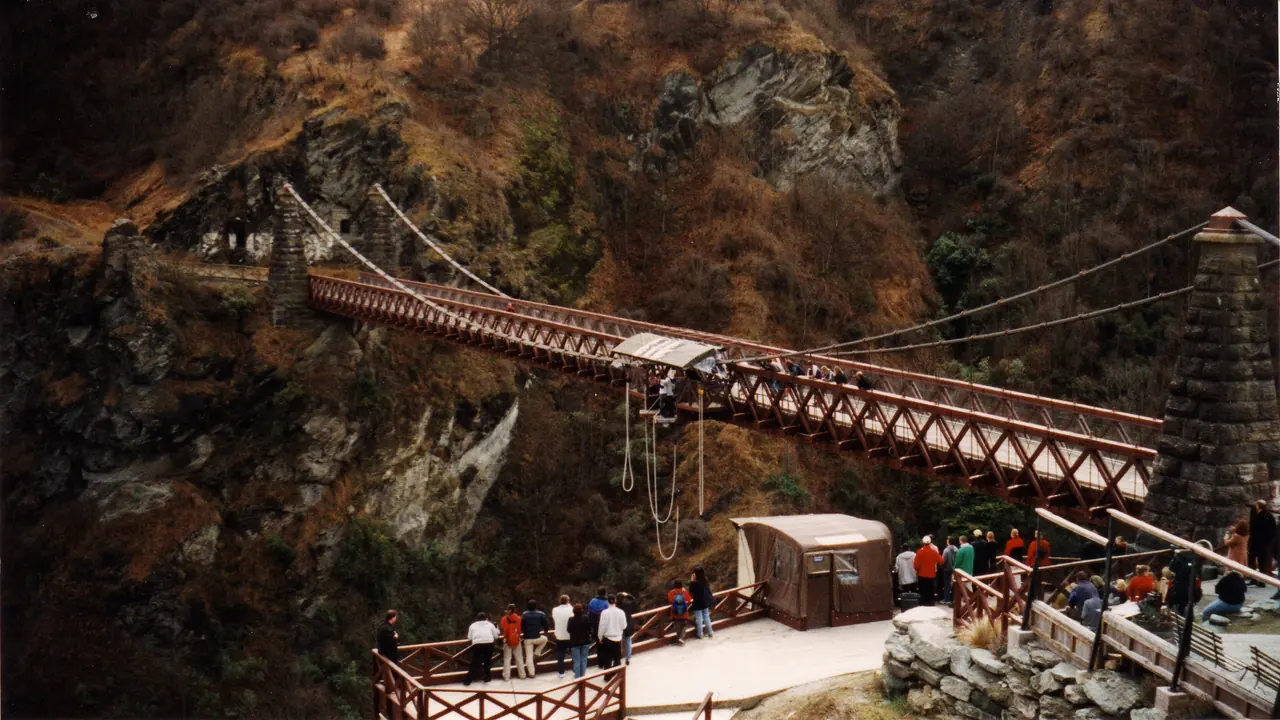
Where did bungy go after the Kawarau Bridge?
Everywhere, fast. AJ Hackett opened in Cairns and Normandy in 1990, Las Vegas in 1994 and Bali in 1995, then added The Ledge in 1997, the 134 m Nevis in 1999, Auckland Harbour Bridge in 2003 and the 233 m Macau Tower in 2006.
Queenstown kept the crown, though. The Ledge above town opened in 1997. The Nevis Bungy followed in 1999, a pod hung on cables over a remote valley, 134 m up, still the highest in New Zealand. Macau Tower in 2006 took the world record for the highest commercial bungy at 233 m. Sentosa in Singapore came in 2017.
Copycats appeared on every continent, of course. But the Kawarau is where it started, and it hasn't moved. If you're weighing the original against the big one, Kawarau or Nevis sets them side by side.
The Kawarau itself has grown up around the jump. The Kawarau Swing opened on 23 October 2025, and there's the Zipride along the gorge too. Nearly forty years on, people are still finding new ways to leave this bridge.
Can you still walk or bike across the Kawarau Bridge?
Yes. The bridge is part of the Queenstown Trail, so walkers and cyclists cross it on the Arrow River Bridges Trail, and the Gibbston River Trail starts right by the bungy centre.
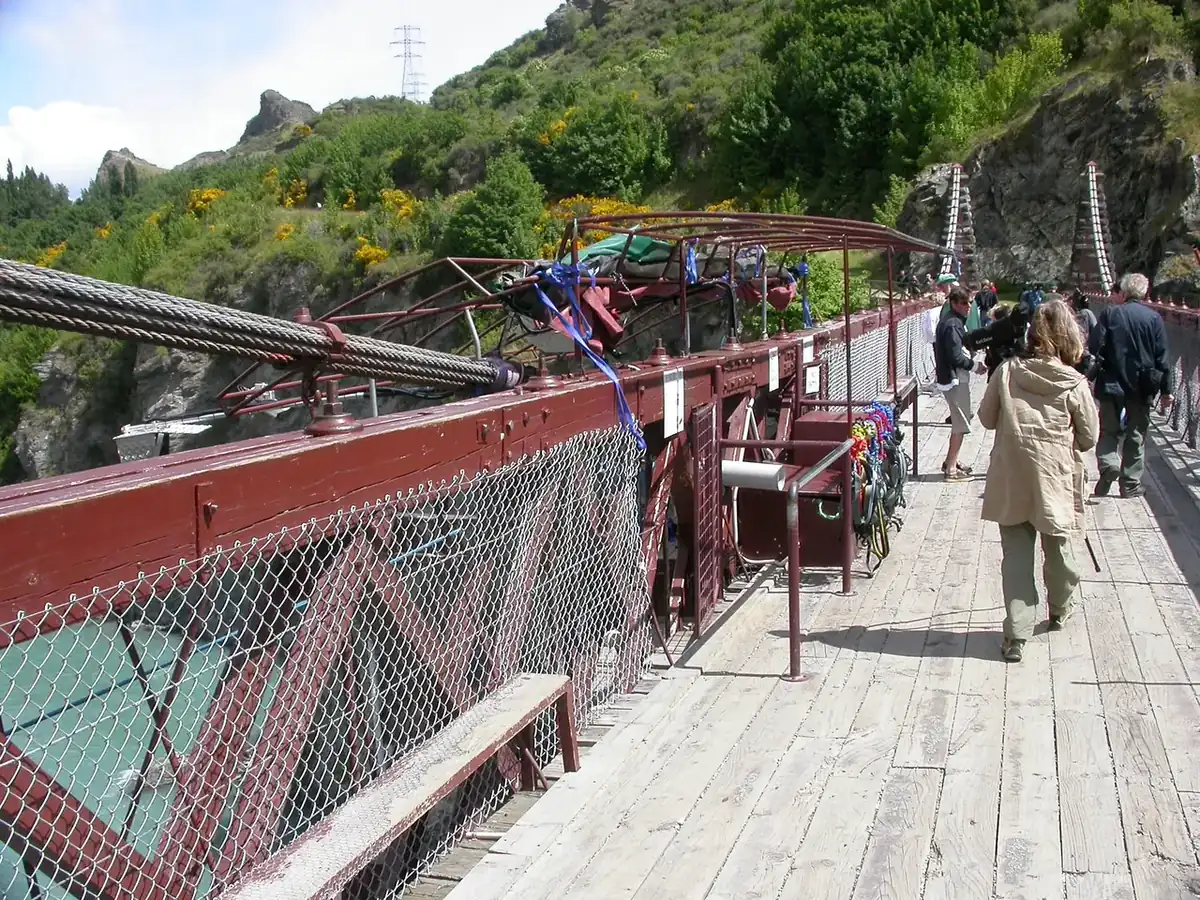
The Queenstown Trail opened in October 2012 and now links well over 130 km of tracks around the Wakatipu. The Arrow River Bridges Trail runs 13.7 km from Arrowtown, crosses the Edgar Suspension Bridge and goes through the Barfoot Tunnel under the highway, and arrives at the Kawarau Bridge. It's grade 2, which in Kiwi trail-speak means easy.
That's the nicest way to meet the bridge, we think. Slow, on two wheels, with a jumper dropping past you if your timing's right. The bridge also had a moment on film: DOC notes the site appeared in The Lord of the Rings, and the Kawarau Gorge doubled as the River Anduin. How to ride or drive here is in getting there.
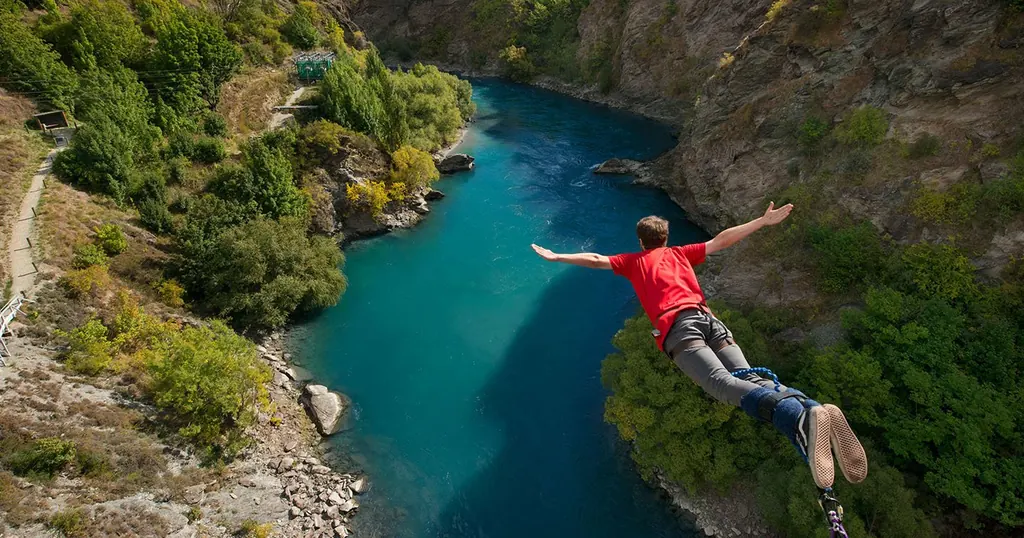
Jump from the 1880 bridge where commercial bungy began: 43 m, solo or tandem, water touch on request, photos and video included.
Check dates Tour detailsFrequently asked questions
When was the Kawarau Bridge built?
It was built in 1879 and 1880 and opened in December 1880, designed by engineer Harry Higginson to give access to the Central Otago goldfields.
Why is the Kawarau Bridge famous?
It is the world's first commercial bungy site. AJ Hackett and Henry van Asch opened bungy jumping there on 12 November 1988. It is also a Category I historic place.
When did cars stop using the Kawarau Bridge?
In 1963, when a new State Highway 6 bridge opened about 230 m upstream. The old bridge was kept for its historic value.
How high is the Kawarau Bridge?
The bungy jump is 43 m (141 ft) to the river. Heritage and DOC sources give slightly different figures for the deck height, from about 42 to 46 m.
Can you walk across the Kawarau Bridge?
Yes. It is part of the Queenstown Trail, on the Arrow River Bridges Trail, so walkers and cyclists can cross it.
Ready to book
Choose your ride
Free cancellation up to 24 hours before on every option. Prices are from-prices in USD and move with the season.
Kawarau Bridge Bungy
- Kawarau Bridge Bungy, solo or tandem, water touch optional
- Photos and video of your jump
- Free Bungy Bus from central Queenstown, or self drive
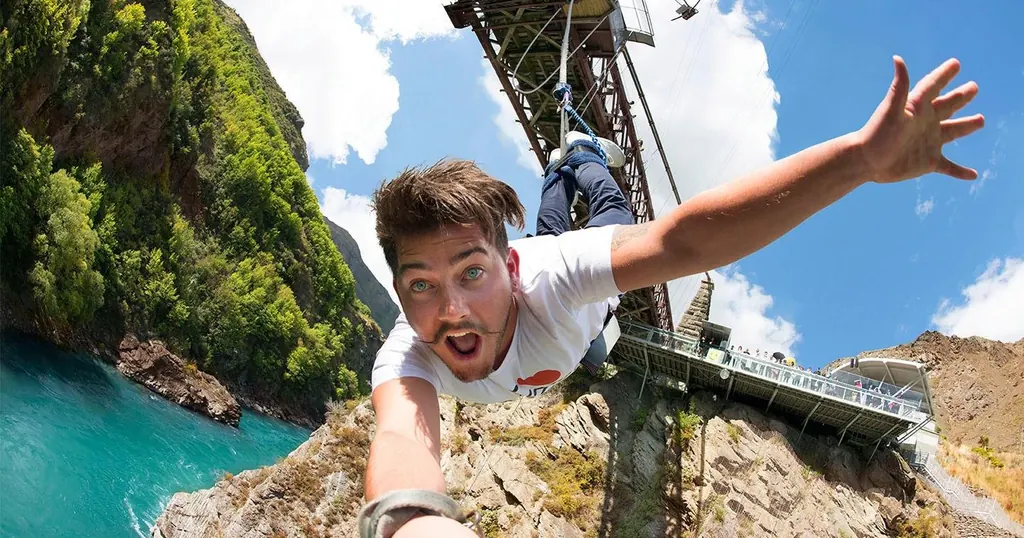
Kawarau Bungy & Swing Combo
- The Kawarau Bridge Bungy (solo, tandem, water touch optional)
- The Kawarau Swing (solo, tandem or triple)
- Photos and video of both
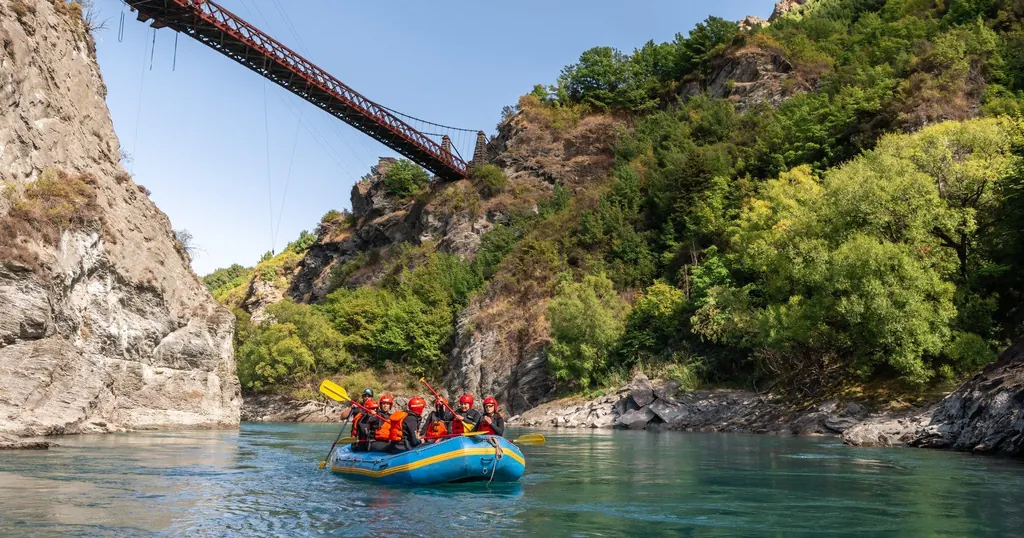
Kawarau River Whitewater Rafting
The Dog Leg rapid, first-timers welcome